






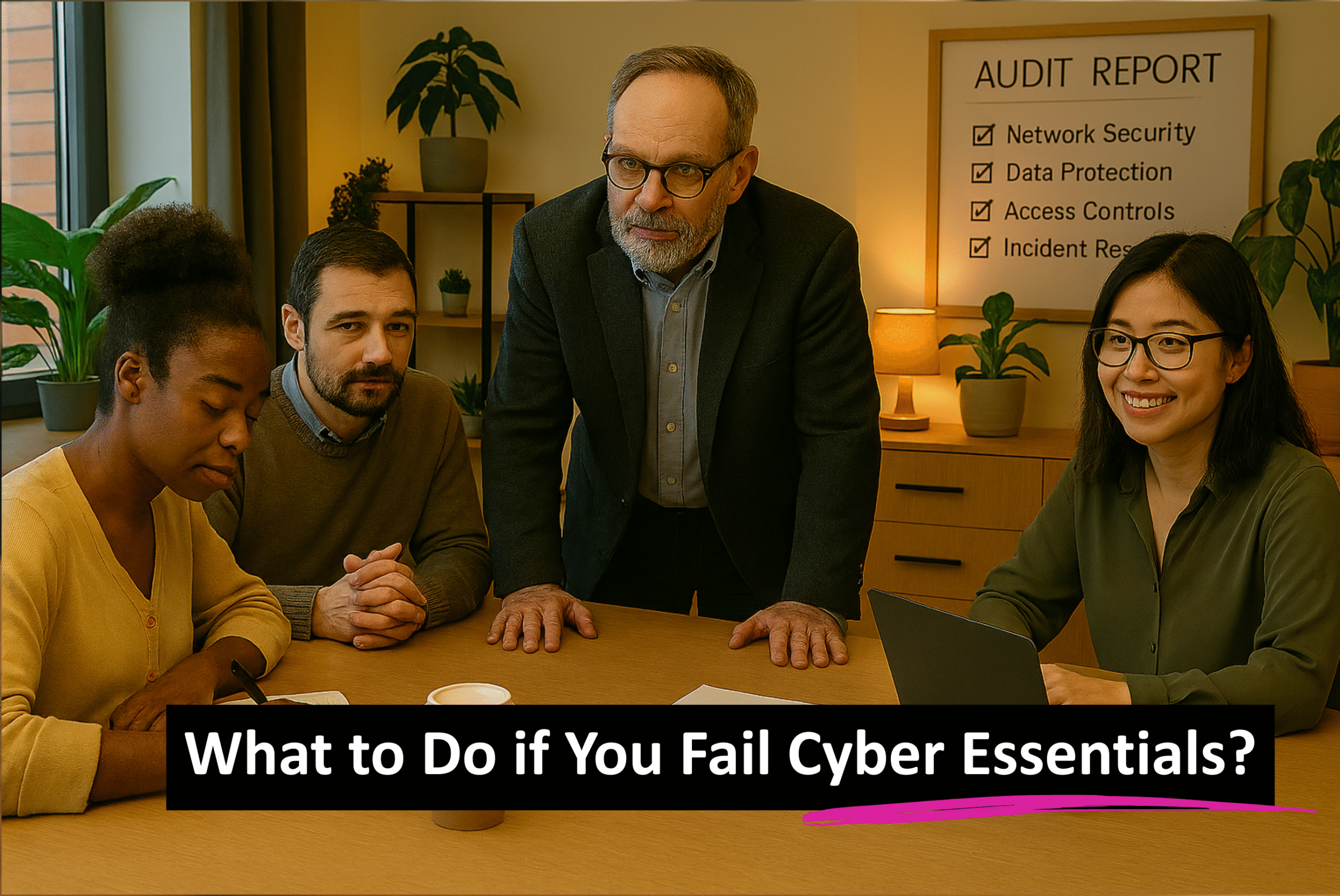
What to Do If You Fail Cyber Essentials: A Practical Guide for SMEs
Failing your Cyber Essentials certification can feel like a setback, but it is a common part of the journey for many small and medium-sized enterprises (SMEs). The good news is that it is not the end. With the right steps, you can improve your cyber security posture and successfully achieve certification.
This guide explains what happens when you fail Cyber Essentials, how to respond, and how to use the experience to strengthen your organisation’s IT security and compliance.
What Is Cyber Essentials?
Cyber Essentials is a UK government-backed certification scheme developed by the National Cyber Security Centre (NCSC). It outlines five key technical controls that help protect businesses from common cyber threats.
For SMEs, Cyber Essentials is a cost-effective way to demonstrate a commitment to cyber security. Certification shows customers, suppliers, and partners that your organisation takes data protection seriously and follows best practices.
Why Cyber Essentials Matters for SMEs
Cyber Essentials certification:
- Helps prevent common cyber attacks
- Builds trust with clients and stakeholders
- Supports compliance with data protection regulations
- Is often required for public sector contracts
The basic level of certification is designed to be accessible for SMEs, with straightforward requirements and affordable pricing.
What Happens If You Fail Cyber Essentials?
If your Cyber Essentials assessment does not pass, you will receive a detailed report outlining the areas that need improvement. This feedback is valuable because it gives you a clear roadmap for strengthening your cyber defences.
Common reasons for failure include:
- Outdated or unpatched software
- Weak password policies
- Unrestricted administrator access
- Lack of multi-factor authentication
You will typically have a short window to address these issues and resubmit. If resubmission is not successful, you can reapply. While reapplication involves a fee, it is a worthwhile investment in your business’s long-term security.
How to Prepare for Reapplication
To improve your chances of passing Cyber Essentials on your next attempt:
- Review your assessment feedback thoroughly
- Implement changes systematically
- Document all updates and improvements
- Seek expert advice if needed
Some certification bodies offer pre-submission reviews, which can help identify issues before your official submission and reduce the risk of another failed attempt.
Managing Reputation After a Failed Assessment
Failing Cyber Essentials does not have to damage your business reputation. What matters is how you respond.
We recommend:
- Being transparent about the areas needing improvement
- Communicating your action plan clearly
- Setting a realistic timeline for recertification
Clients and partners understand that cyber security is an ongoing process. By showing accountability and a proactive approach, you can build trust and demonstrate your commitment to improvement.
Cyber Essentials Compliance Tips for SMEs
Here are some practical steps to help you meet Cyber Essentials requirements and improve your overall cyber security:
- Update software regularly: Ensure all systems are patched and supported
- Limit admin access: Only grant elevated privileges where necessary
- Enable multi-factor authentication (MFA): A simple but effective security measure
- Train your staff: Employees should understand basic cyber security principles
- Conduct internal audits: Regular checks help identify and fix vulnerabilities early
Cyber security is not a one-time task. It is an ongoing effort. Staying informed and maintaining good practices will help you achieve and retain certification.
Final Thoughts
Failing Cyber Essentials can be a valuable learning experience. It highlights gaps in your security and gives you the opportunity to make meaningful improvements. With the right support and a clear plan, your business can recover, reposition, and succeed.
If you need help interpreting your assessment report or preparing for reapplication, our Cyber Essentials advisory team is here to support you every step of the way. For more details on the Cyber Essentials scheme, you can visit the NCSC website.








Recent Comments